
What Child Grieving Looks Like
A brief look at a few of the ways our children process grief that may challenge our expectations.
Katie Green
4/7/20263 min read
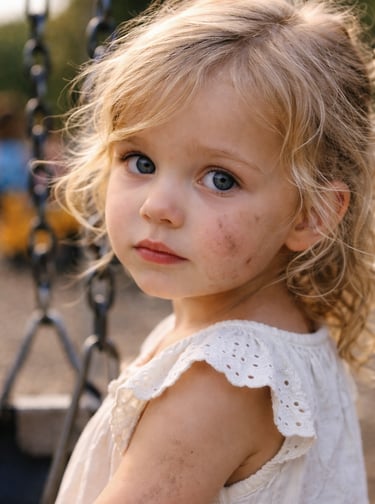
Kids puddle jump through grief. After a loss, they may appear indifferent, returning to play as if nothing happened. This allows them to detach themselves from overwhelming pain. It is natural for a child to cry one moment, and then ask for a snack the next, and then run outside and play. They process grief in small pieces, because taking it all in at once would be too much.
Acting-out behavior This type of behavior can manifest in dropping grades, defiance, or they will adopt a general I-don’t-care attitude. These often stem from feelings of insecurity, and acting-out behavior gives them a sense of control in a world that suddenly feels unstable.
Some children may feel abandoned. Even in cases of loss that was inevitable kids can internalize it and feel unloved, which can affect their self-worth. Over time, this belief can become a self-reinforcing. “See? nobody loves me.”
A desire to provoke punishment. Kids often have a false assumption that they can control outside forces by thoughts or actions. As they try to understand what happened they can believe they caused the loss. “If I hadn’t said…” or “If I had been better…”
This narrative gives them a feeling of guilt as if the loss was their fault, and they may subconsciously attempt to punish themselves. If you and other adults who love them can learn to recognize these behaviors, children can teach their adults what they need to grieve appropriately.
Regressive behavior Bedwetting, clinginess, baby talk, separation anxiety, are common. Regression is often a return to a developmental stage that once felt safe. When children are allowed to move through this time without shame, they typically emerge with renewed confidence and competence.
Big man or big woman syndrome After loss kids may attempt to replace the person who died. After a loss, they may try to fill the role of the person who died as a way to avoid fully facing the loss. This can be unintentionally reinforced by grieving adults who lean on the child for strength In some cases, a child may even take on responsibilities that are not age appropriate, suppressing their own grief in order to be “the strong one”.
Loss and Loneliness You can observe a child’s loneliness, but you cannot fully enter it. Your grief is different because you were impacted differently by the loss. It is difficult to witness this loneliness because the instinct is to fix it, but presence and patience are the most meaningful support you can offer.
Explosive emotion This includes strong emotions such as anger, blame, hatred, terror, resentment, rage and jealousy. These emotions are especially hard to navigate. What may look like misbehavior is often a child testing reality to see if they can make their world return to what it was. When these emotions are not met with patience and understanding they may turn their anger inward and that results in low self-worth, depression, chronic feelings of guilt and even physical symptoms.
Reconciliation Children do not “get over” grief, but with healthy support they can move toward reconciliation. Overtime, they begin to accept the loss and discover that life can continue on the other side. You may notice their spark returning. Interest in activities is renewed, and the ability to express their memories fondly.
No timeline can be provided for reconciliation; every child is different. With understanding and patience, kids will emerge resilient. When adults respond with confusion or disapproval, kids shut down. They create emotional walls that distance them from those who care about them most. Many caregivers deeply want to help, but their ow pain can make it difficult to know how. This is where outside support can make a meaningful difference, reduce pressure, and help restore connection within families.
Whether your family is facing death, divorce, or another form of loss, support is available. No child should have to grieve alone. At SoulShare we hope this understanding helps you approach your child with compassion instead of confusion, and we would like to be a part of your grief journey.
One of the difficult things for parents is to accept is that kids grieve differently from adults. Many parents feel concerned when they don’t see the behaviors they expect from their grieving kids. We tend to look at our children as miniature adults and expect them to perform on a 'miniature' level. To the contrary, Their brains are different, their emotional responses are different, and so they will process losses differently from adults. Alan Woelfelt offers helpful insight into the wide range of ways children respond to loss. The following is just a brief guide to help parents recognize some of these differences so that they aren't shocked or overwhelmed by the responses they see in their kids.
Contact
katie.soulshare@gmail.com
262-409-9588
Stock photos on this website are used free with permission from Freepik